Welcome LTMC CNC Busbar Machine
Language:
 ∷
 ∷
 ∷

∷
∷
∷
 ∷
∷
∷
A busbar cutting (shearing) machine should be chosen from material, finished-length tolerance, squareness, burr limit, deformation and production pattern — not catalogue maximum thickness alone. Poor cut edges create rework in punching, bending, assembly and electrical inspection, so prove quality with documented FAT samples cut consecutively, not a single showcase bar.
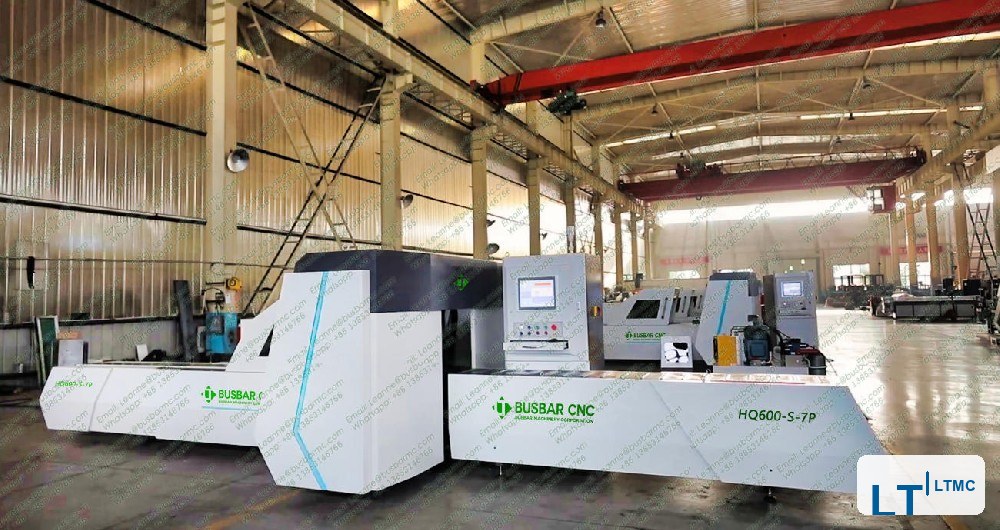
Hydraulic shearing is standard for flat copper and aluminum production: short cycle, few chips, edge quality governed by clearance, sharpness, alignment, clamping and support. Sawing suits end profiles or material conditions that reject shearing, but expect chips, kerf loss and usually a longer cycle — sawing is not automatically “higher quality.”
On LTMC U-3-C machines the shear shares the frame with punch and bend, with independent pump groups so stations can run in parallel when staffed. Published shear envelopes track the model class: about 12×150 (303), 16×200 (503) and 20×250 (803) mm. If most jobs also punch and bend, a sized 3-in-1 usually beats a standalone shear unless cutting is your bottleneck — compare on our three-in-one page or the dedicated punching and cutting centers.
Measure length, squareness, burr height, end deformation and surface on multiple consecutive parts with agreed instruments.
Often yes for SME mixed work; choose a dedicated station when cut hours per day justify separate capacity.
Contacts:Leanne
Mobile:+86 13853146766
Phone:Whatsapp:+86 13853146766
Email:[email protected]
Address: No.9566 Jingshi Rd., Jinan City, Shandong, China