Welcome LTMC CNC Busbar Machine
Language:
 ∷
 ∷
 ∷

∷
∷
∷
 ∷
∷
∷
The same hydraulic 3-in-1 busbar machine can process copper and aluminum when force, die clearance, blade condition, bend radius and clamp pressure match the material grade and temper. Do not assume a copper-approved setup will release the same angle, burr height or hole quality on aluminum: change material, re-check clearance, springback table and first-article samples.
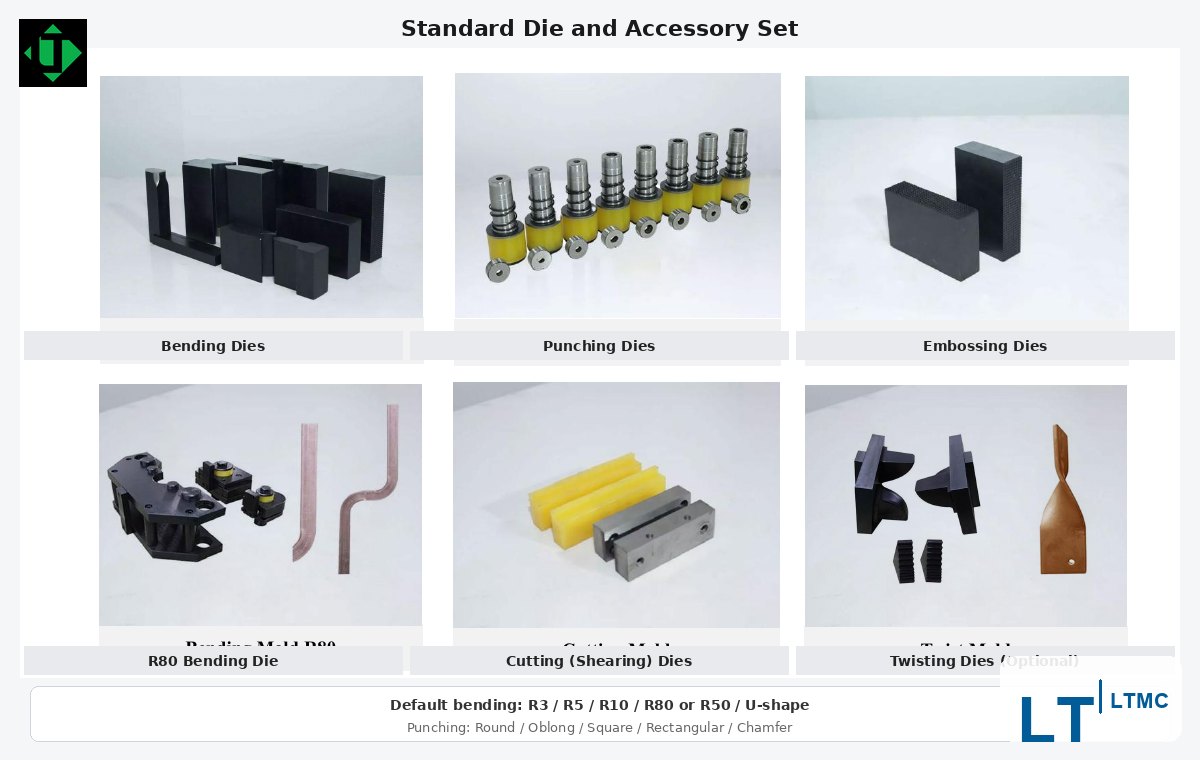
Punch quality equals die alignment plus clearance plus stripper force for the thickness × hole diameter. Keep separate clearance notes for copper and aluminum on the same turret, and inspect the first holes for burr, tear and ovality after every material switch before releasing the batch. Published punch ranges: Φ4.3–Φ25 / Φ30 / Φ34 on the 303 / 503 / 803.
For copper, inspect burrs, end distortion and blade wear. For aluminum, prioritize clamp pressure and support — excess hold-down leaves marks. A worn blade hurts both materials; verify approved blade clearance and clamping before raising hydraulic pressure.
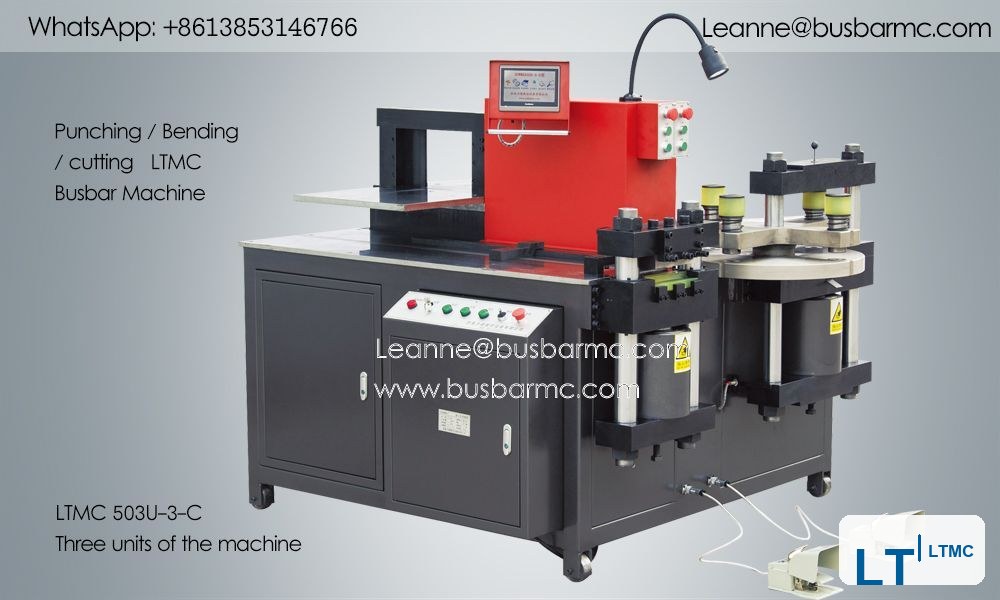
Aluminum recovers more after unload, so it typically needs larger compensation and careful minimum radius. Never paste copper HMI recipes onto aluminum without a trial bend. Close bends under ~40 mm spacing need engineering review on either material.
Yes, when capacity, tooling and settings are approved for each material — dual capability is not automatic after a copper-only FAT.
Often yes for clearance and radius; at minimum keep separate process cards even if the die family looks the same.
Higher elastic recovery changes the released angle — measure the released angle, not only the programmed value. Details on our 3-in-1 machine page.
Contacts:Leanne
Mobile:+86 13853146766
Phone:Whatsapp:+86 13853146766
Email:[email protected]
Address: No.9566 Jingshi Rd., Jinan City, Shandong, China