Welcome LTMC CNC Busbar Machine
Language:
 ∷
 ∷
 ∷

∷
∷
∷
 ∷
∷
∷
A CNC or servo-assisted busbar machine improves efficiency mainly by cutting repeated measuring and positioning, shortening repeat-order setup and executing confirmed coordinates more consistently — measure the benefit in minutes per conforming part, operator minutes, first-pass yield, changeover time and rework, not punch stroke speed alone. On 303U-3-C / 503U-3-C / 803U-3-C class machines, HMI/PLC bend modes and optional servo stops pay off most when drawings recur.
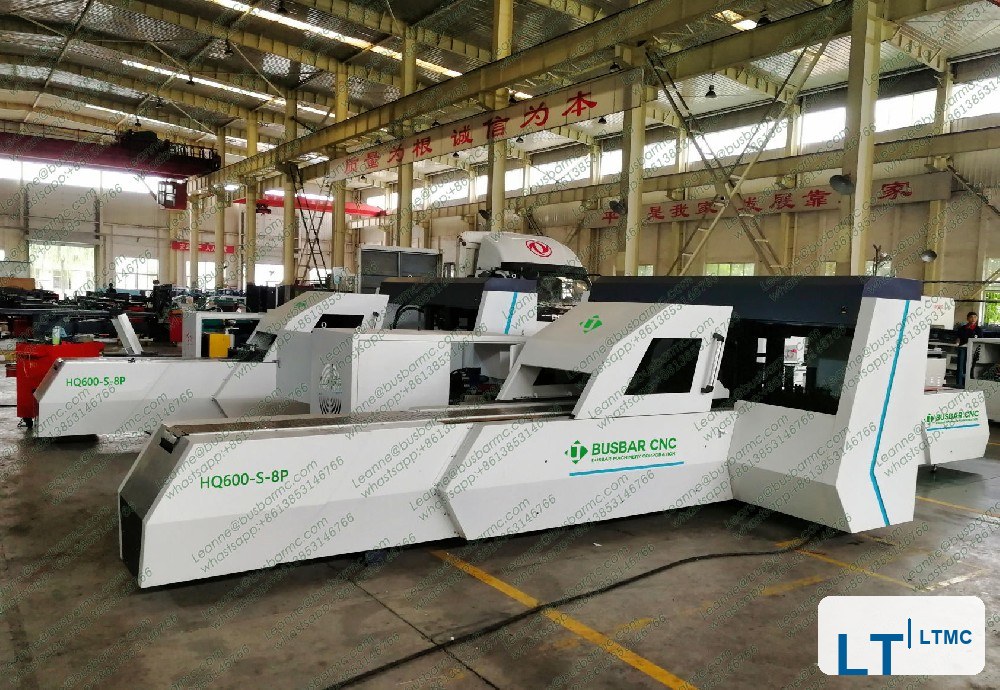
CNC/servo may control length stops, hole coordinates, bend recipes or stored programs depending on configuration — it does not automatically mean automatic loading, tool change or inspection. Hydraulic force and CNC control are not mutually exclusive: many efficient cells use hydraulic stations with CNC positioning and PLC bend libraries.
| Lever | What improves | Metric to record |
|---|---|---|
| Servo positioning | Less marking and ruler work | Positioning minutes per part |
| Stored programs | Faster repeat orders | Program-to-first-conforming-part |
| Prepared changeovers | Model A → Model B | Full changeover clock |
| Data import | Less re-keying | Import to verified program |
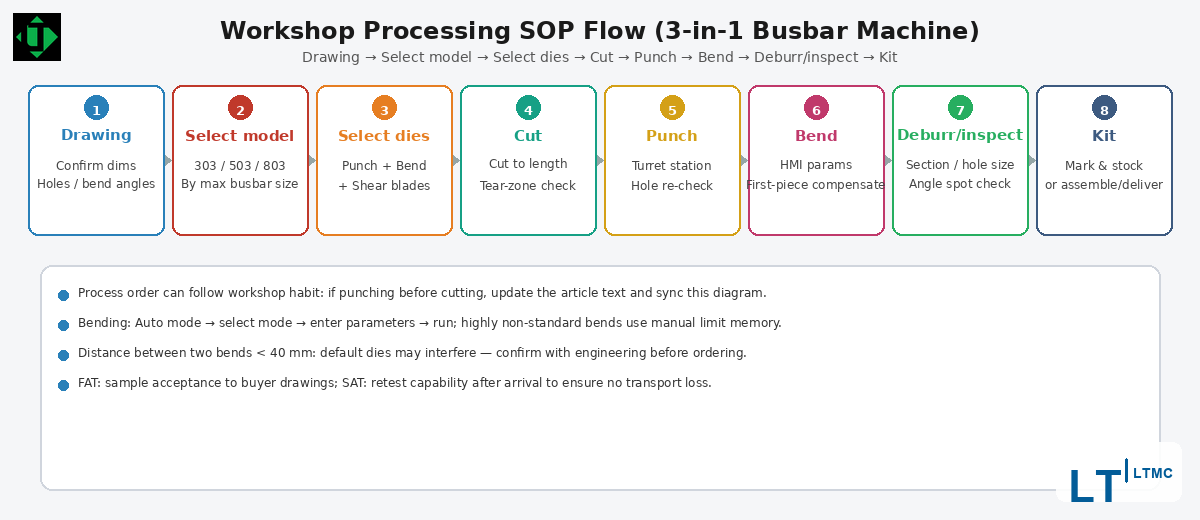
No — CNC helps when positioning or setup is the bottleneck; pure stroke speed is a weak KPI.
Three independent pump groups, Siemens PLC bend modes, HMI recipes and optional servo positioning — see the 3-in-1 range and CNC punching centers.
Contacts:Leanne
Mobile:+86 13853146766
Phone:Whatsapp:+86 13853146766
Email:[email protected]
Address: No.9566 Jingshi Rd., Jinan City, Shandong, China